
Rice Field Photography Bali: Everything You Need to Know Before You Shoot

Juara Production Editorial Desk
July 31, 2026
12 min read
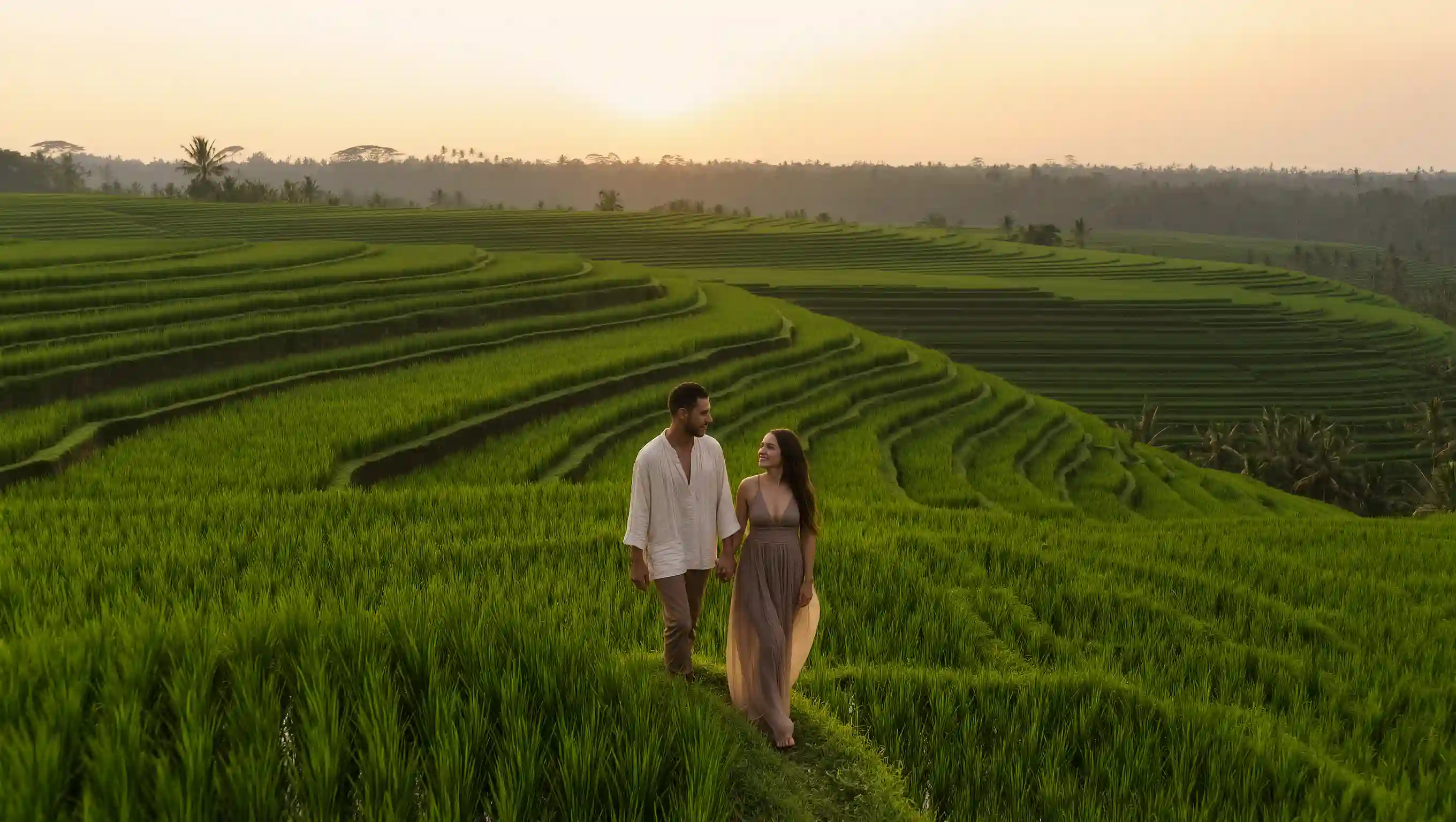
There is a quiet kind of magic that unfolds when morning mist settles over Bali’s terraced paddies, turning every stalk of rice into a thread of gold under the rising sun. Rice field photography Bali is a specialized photo session that uses Bali’s iconic terraced paddies as a natural, culturally rich backdrop for portraits, pre-wedding images, and personal travel memories, usually captured in the soft light of early morning or late afternoon.
The answer lies in choosing the right location, the right hour, and the right team who understands the land as much as the lens. That means knowing which terraces photograph best, when the light is most flattering. For anyone asking where in Bali to capture that dreamlike rice field moment, this guide helps you plan it well and create photographs with more depth, story, and connection than a typical tourist stop.
Key Takeaways
- Rice field photography Bali captures the island’s iconic terraced landscapes as a natural, ever-changing backdrop for portraits and storytelling.
- The best results depend heavily on timing shooting early morning or late afternoon lets the low-angle sunlight wash the terraces in warm, golden tones, while midday light tends to flatten the colors and create harsh shadows.
- Popular terraces like Jatiluwih and Tegalalang each offer a distinct mood, from expansive golden light to intimate emerald pathways.
- Working with a local photography team helps navigate farmer etiquette, safe walking paths, and ever-changing field conditions.
- Rice field sessions suit couples, families, solo travelers, and content creators looking for authentic, nature-driven imagery.
What Is Bali Rice Fields Photography?
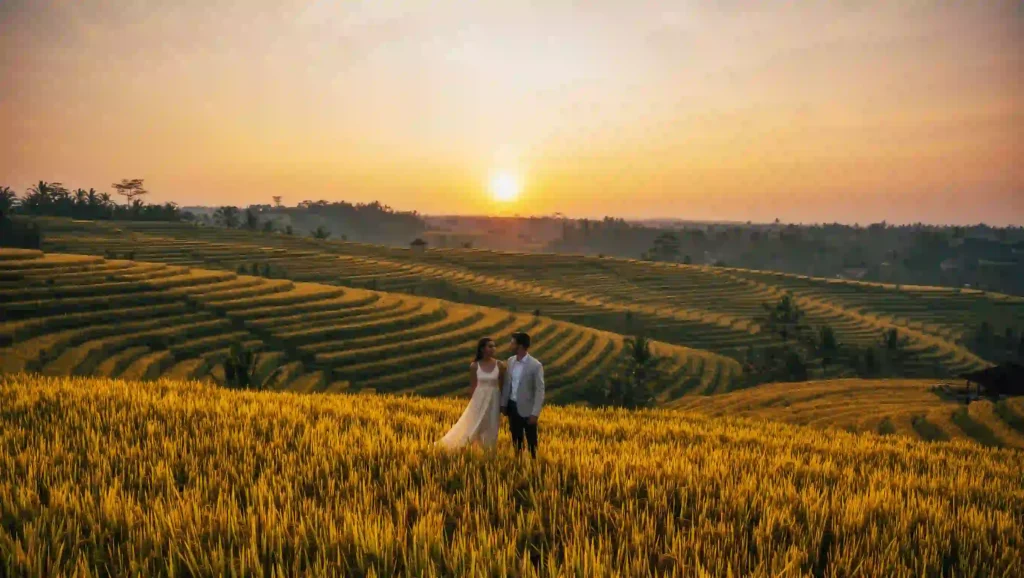
Rice field photography is the practice of using terraced or flat paddy landscapes as the primary setting for a photo session, whether for portraits, couples, families, or editorial storytelling. Rather than relying on studio backdrops or urban scenery, this style leans entirely on natural elements the geometry of the terraces, the movement of water, the texture of young rice shoots against mature golden stalks, and the shifting light throughout the day.
In Bali specifically, rice field photography carries extra weight because the terraces themselves are part of the island’s identity. The Subak irrigation system, recognized by UNESCO as a World Heritage Site, has shaped these landscapes for over a thousand years, though Balinese rice cultivation dates back thousands of years; through Tri Hita Karana, it combines spiritual, natural, and social elements, with water managed by 50 to 400 community representatives.
Photographing bali rice landscapes means working with a living agricultural tradition rather than a static scenic backdrop, one known around the world; rice is also a staple food here, with white, black, and red varieties grown. That context is part of why images taken here often feel more grounded and meaningful than a typical tourist snapshot.
Why Is Rice Field Photography Important in Bali?
Bali offers no shortage of postcard-worthy backdrops, from white-sand beaches to ornate temple gates, yet the rice terraces occupy a special place in how the island is remembered and photographed. Their importance goes beyond simple aesthetics they carry cultural weight, offer technical advantages few other locations can match, and consistently produce images that feel personal rather than generic. Understanding why this landscape matters so much helps explain why so many photographers and travelers deliberately build their Bali itinerary around a terrace session.
- It Showcases Bali’s Most Authentic Natural Identity
Beyond beaches and temples, the rice terraces reflect the subak system, a centuries-old community irrigation tradition — giving photos a sense of place, and a layer of cultural authenticity, that a resort pool or manicured garden simply can’t replicate. - The Light Quality Is Genuinely Exceptional
Because the fields are open and unobstructed, sunrise and late-afternoon light spreads evenly and warmly across the landscape. Flooded paddies also act like natural mirrors, doubling the sky’s color and adding a luminous quality studio lighting struggles to imitate. - It Offers Natural Texture and Depth
The layered terraces create leading lines and depth almost automatically, giving photographers a built-in sense of composition without heavy staging or props the landscape itself does much of the visual work. - It Appeals Strongly to International Audiences
For travelers from urban environments, working rice fields are unfamiliar and striking, making them a favorite backdrop for travel content and pre-wedding albums shared back home a globally recognized side of Bali beyond resorts. - It Supports Storytelling, Not Just Posing
A couple walking a narrow terrace path, or farmers going about their work in the background, tells a more genuine story than a posed studio shot. The shifting wind, water, and daily farm activity naturally push sessions toward candid, documentary-style moments. - It Connects Visitors to Local Life
Sessions in active fields often involve brief, respectful interactions with farmers, giving the photography an unscripted quality guests remember long after the trip a nod from a farmer, a passing water buffalo, the sound of irrigation water.
Taken together, these factors explain why rice field photography has become such a defining part of the Bali visual identity, and why so many visitors consider it a non-negotiable stop on their photography itinerary rather than an optional add-on.
Core Elements of Stunning Rice Field Photography in Bali
Great rice field photography rarely happens by accident, and it usually comes down to how well a few core elements are handled together. Lighting sits at the center of it all because the terraces are open to the sky; shooting during harsh midday sun tends to flatten the greens and blow out highlights, while low light in the early morning or late afternoon often gives the best light and the strongest contrast, bringing out every ridge and reflection in the water.
Composition is where the terraces really do the heavy lifting. The natural curves and layered lines of the paddies guide the eye through the frame, so photographers often position subjects along these lines rather than against them, focusing on layers and using strong composition to lead the viewer toward the middle of the picture while letting the landscape’s own geometry carry the visual weight.
Finally, editing plays a quieter but important role because rice fields already carry strong natural color, and reflections in the water can also create more dynamic compositions; the goal in post-production is usually to enhance rather than overhaul, preserving the authentic greens and golds instead of pushing the image toward an artificial, overly saturated look that feels disconnected from the real place, though black and white can work well when the aim is to emphasize texture and contrast over color.
Read more: Nature Photography Bali: How to Capture Epic Landscapes
Who Is Rice Field Photography in Bali Perfect For?
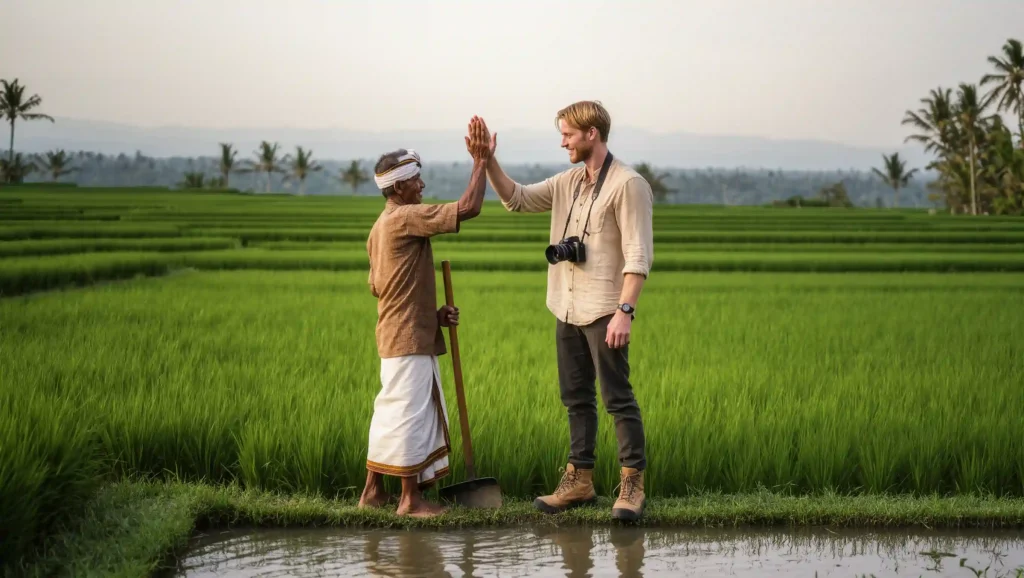
Because rice terraces offer such a distinct combination of natural beauty, open space, and cultural texture, they tend to appeal to a wide range of visitors rather than a single type of client. Some are drawn to the romance of the setting, others to the sense of adventure it offers away from crowded tourist spots. Below are the groups who tend to get the most out of a rice field session.
- Pre-wedding Couples
Looking for a romantic, nature-forward alternative to beach or villa settings, especially those who want imagery that feels adventurous and unposed. - Honeymooners
Who want a quieter, more intimate session away from crowded tourist spots, often paired with a short walk through the terraces at sunrise. - Families Traveling with Children
Who want candid, playful photos in an open, safe environment where kids can explore without the constraints of an indoor studio. - Solo Travelers and Content Creators
Building a personal portfolio or social media content who want striking, editorial-style imagery that stands out from typical beach shots. - Fashion and Editorial Clients
Seeking a distinctive natural backdrop for lookbooks, campaigns, or portfolio work that leans into Bali’s landscape rather than urban settings. - Groups and Friend Reunions
Wanting a memorable, shared photo session that captures the trip’s atmosphere rather than a formal group portrait.
Whatever the occasion, the common thread among these clients is a desire for imagery that feels connected to a real place rather than a generic backdrop something the rice terraces deliver naturally.
Tips for Stunning Rice Field Photography in Bali
Once you understand why the terraces work so well as a backdrop, the next step is knowing how to actually plan and execute a session that makes the most of them. The tips below cover the practical details from timing and location to etiquette that separate an average rice field photo from one that genuinely captures the atmosphere of the place.
1. Shoot During Golden Hour
The hour after sunrise and the hour before sunset consistently produce the most flattering light for rice terraces, making the best time for photography early morning or late afternoon. During these windows, the sun sits low on the horizon, casting long shadows and warm tones across the fields rather than the flat, overhead light of midday, which tends to wash out color and create unflattering shadows on faces.
Midday sessions tend to look harsher and less dimensional, so building the shoot schedule around these windows makes a noticeable difference in the final images. Photographers who want especially vivid greens often plan around March and April before harvest. It’s worth arriving slightly early too, since the light changes quickly during these transition hours and the best few minutes can pass faster than expected, and it helps tourists arrive before many tourists reach the terraces.
2. Choose the Right Terrace for Your Vision
Wide, expansive fields work well for dramatic landscape-style shots, while narrower, layered terraces suit close-up portraits. If the goal is a sweeping, cinematic image with the subject small against a vast green landscape, a location like Jatiluwih’s open terraces, located about 700 meters above sea level, tends to work best, whereas tighter, winding paths create a more intimate, storybook feel.
By contrast, the Tegalalang rice terraces near Ubud are famous for their dramatic terraced hillsides and are the most tagged on Instagram, while the Tegalalang rice fields remain a favourite for visitors who want a more iconic Bali valley backdrop rather than a place to skip. If you’re planning to base your trip near any of these terraces, luxury car rental in Bali can make it easier to reach multiple locations comfortably, especially for early sunrise sessions that require a smoother, well-timed drive.
3. Dress with the Landscape in Mind
Because the fields are naturally green and gold, clothing in soft neutrals, whites, or earth tones tends to stand out beautifully, while overly busy patterns can compete with the scenery instead of complementing it. Flowing fabrics also tend to photograph well against the terraces, as they catch the breeze and add a sense of movement to otherwise static poses.
It’s also worth considering footwear, since paths can be uneven, muddy, or slippery depending on recent rainfall comfortable, closed shoes or sandals with good grip are generally a safer choice than delicate heels or sandals.
4. Respect the Working Land
Rice fields are active agricultural spaces, not photo sets, so staying on designated paths, avoiding crops, and being mindful of farmers at work is essential both out of respect and to avoid damaging delicate terraces. Rice plants grow in their own way, and they should not be disturbed for the sake of a shot. Stepping into a flooded paddy or trampling young shoots can genuinely harm a farmer’s livelihood, so it’s important to treat the land with the same care a guest would show when visiting someone’s home.
Many terrace owners welcome respectful photography and even appreciate a small entrance fee or donation, which helps maintain the land and the pathways that make these sessions possible in the first place. When asking to photograph near active fields, treat local farmers and Balinese people with respect.
5. Work with a Professional Local Team
Local conditions change quickly water levels, crop growth stages, and even accessible paths shift throughout the year. A professional local team knows which terraces are photogenic at any given time, understands proper etiquette with farmers, and can adapt quickly if weather or lighting conditions change mid-session.
Beyond technical knowledge, a local team also brings practical logistics arranging permissions, helping you plan a smoother visit by car, advising where to park near the entry point. That kind of on-the-ground flexibility is difficult to replicate without genuine local experience. Working with an experienced photography services team ensures every detail, from timing to location, is handled by people who know the terraces best.
Following these tips won’t guarantee perfect weather or empty fields, but they go a long way toward making sure the session runs smoothly and the resulting photos feel intentional rather than accidental, and they can also recommend a nearby hotel if you want sunrise access with less travel time.
Read more: Recommended Shooting Locations in Bali: The Best Spots for Your Projects!
Create Timeless Rice Field Photography in Bali with Juara Production
From choosing the right terrace and timing the light just right, to guiding you through the practical and cultural details of shooting on active farmland, rice field photography in Bali rewards preparation and local expertise. Done well, it produces images that feel less like tourist snapshots and more like genuine chapters of your Bali story.
If you’re planning a session among Bali’s iconic terraces, Juara Production Photography & Videography Service brings together experienced local photographers who understand both the technical craft and the cultural context of shooting in the rice fields helping you walk away with images that are as authentic as the landscape itself.

Frequently Asked Questions
Related Article
Cinematic Wedding Videography in Bali: Relive Your Day Like a Film
There’s a particular kind of stillness that settles in years...
There’s a particular kind of stillness that settles in years after a wedding, when the flowers have long faded and...

Sound Design and Mixing for Video Production in Bali: Complete the Story with Sound
There’s a reason a beautifully shot video can still feel...
There’s a reason a beautifully shot video can still feel unfinished, and it usually has nothing to do with the...
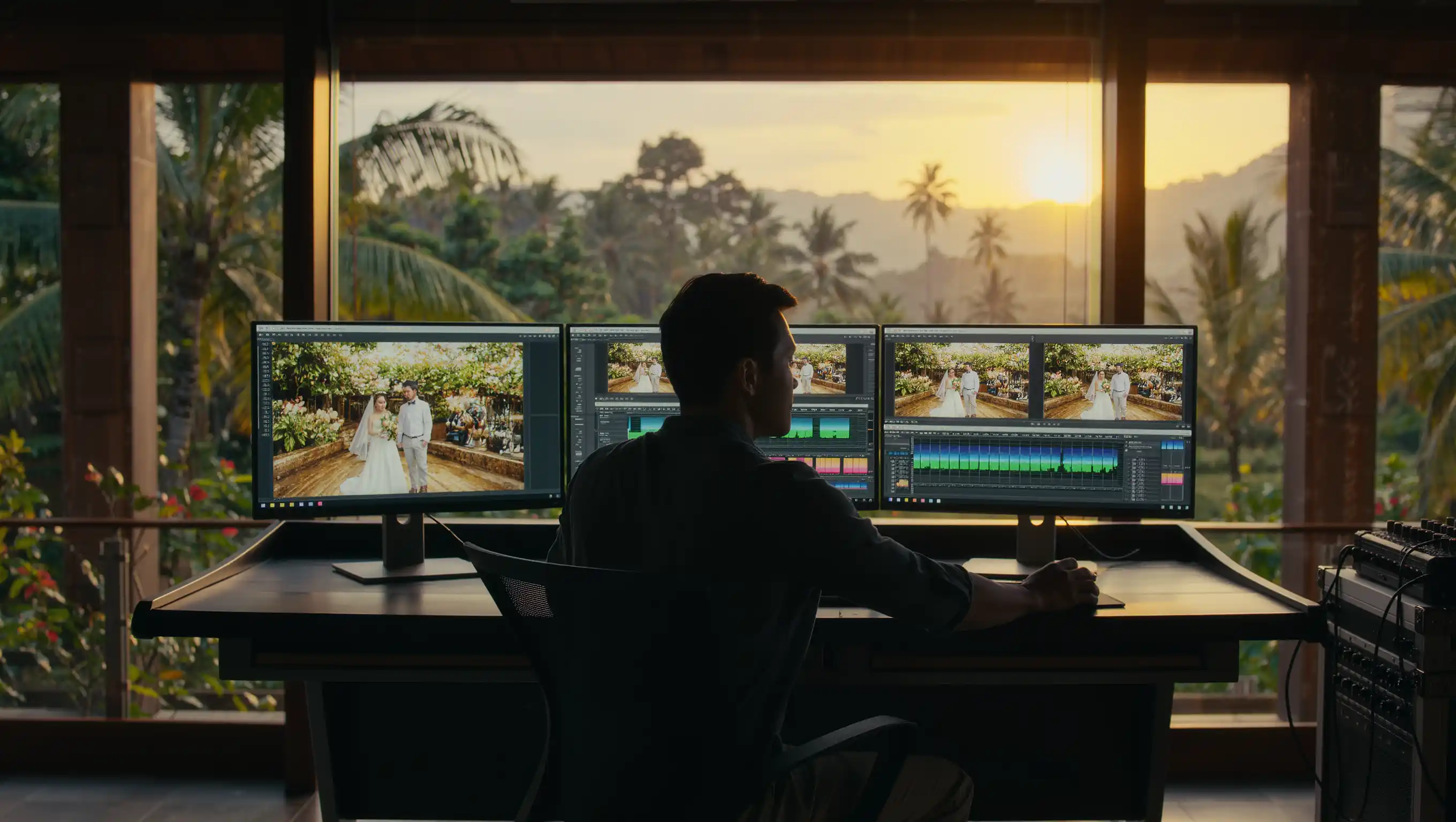
Video Color Grading Services in Bali: Give Your Footage a Cinematic Finish
There’s a moment in post-production when a video stops looking...
There’s a moment in post-production when a video stops looking like raw footage and starts looking like a film, and...
