
Video Post-Production Services in Bali: Everything You Need to Know Before You Hire an Editor

Juara Production Editorial Desk
August 3, 2026
11 min read
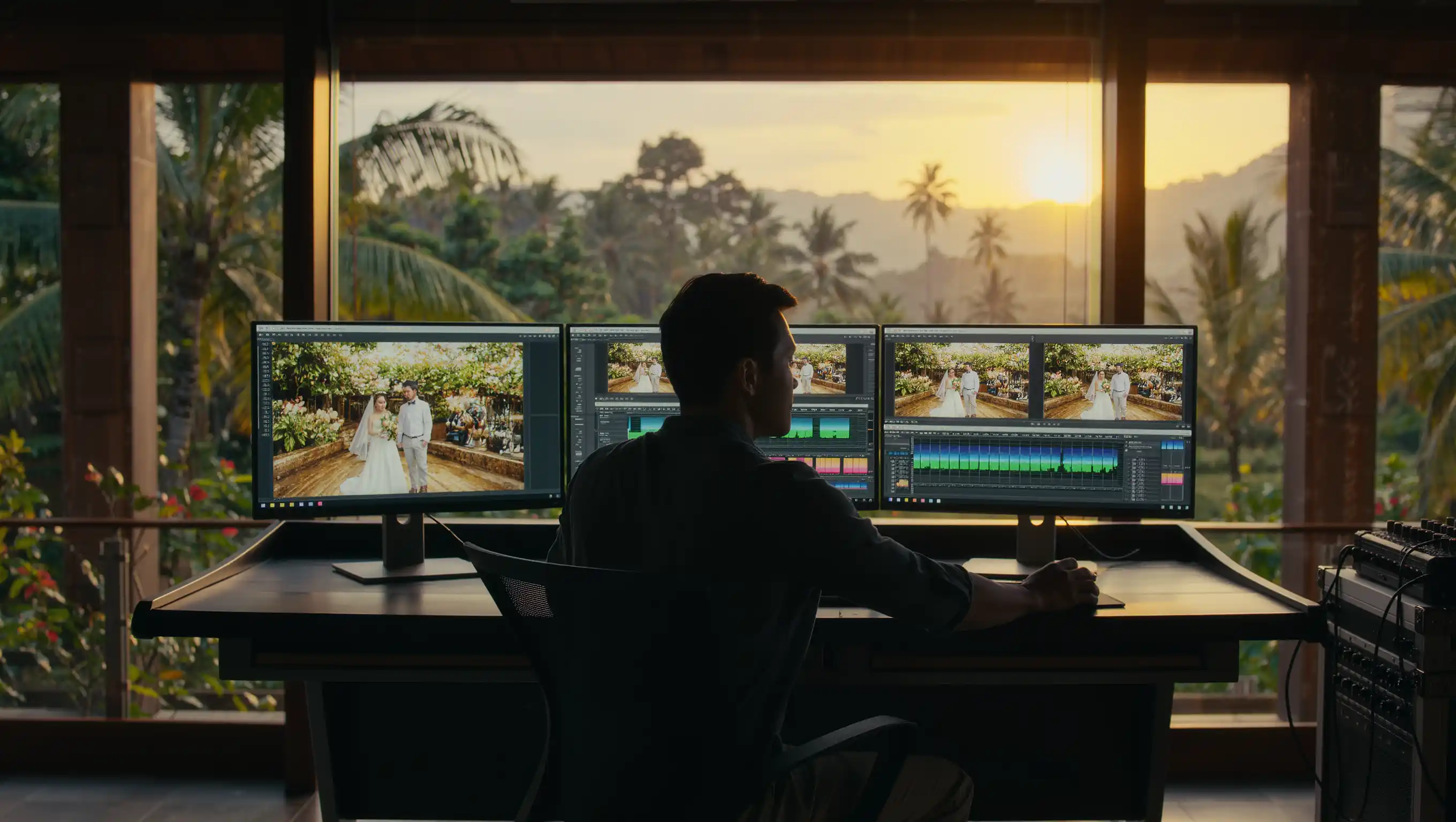
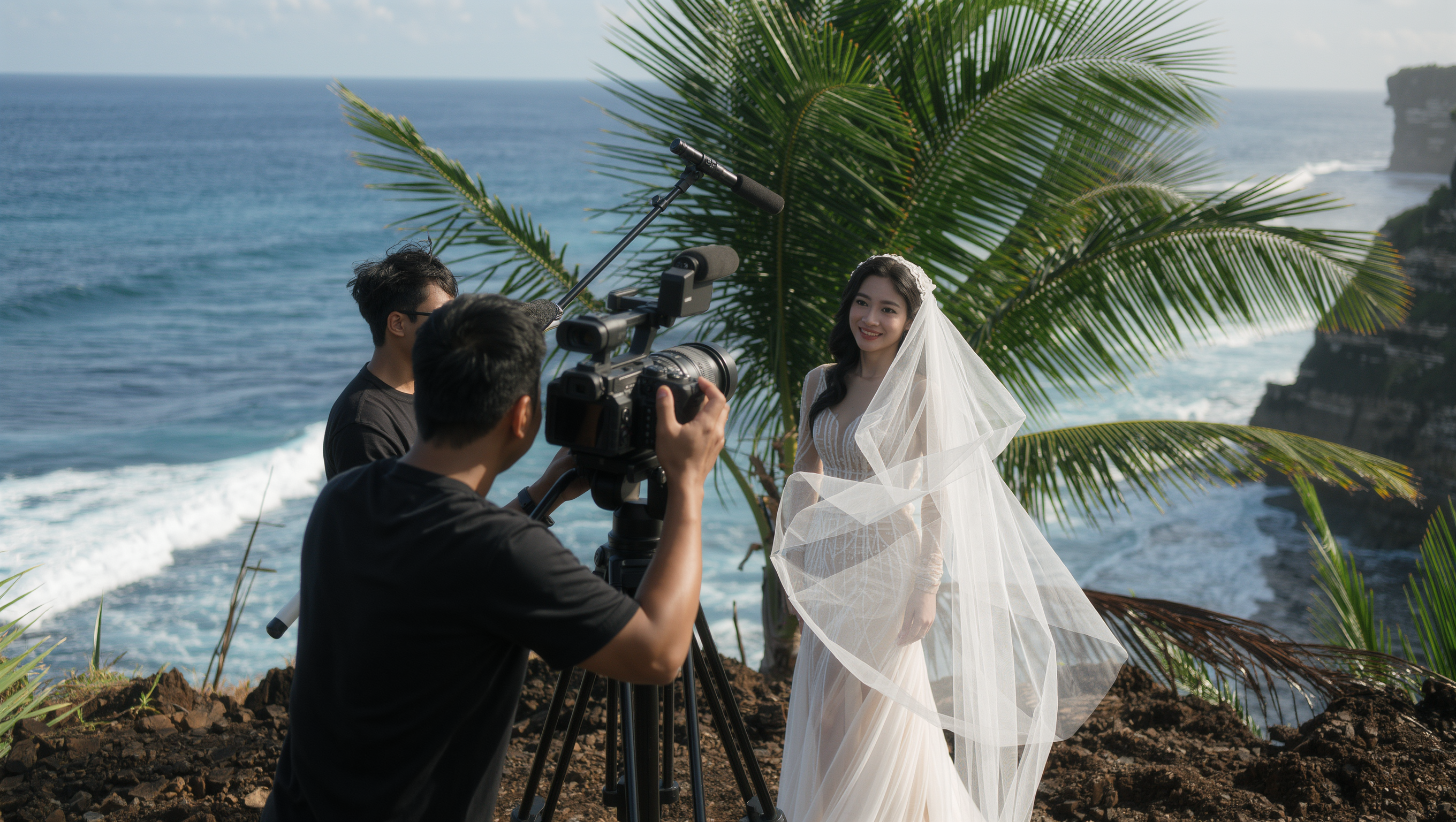
Every great film begins long before the final cut it begins with raw footage waiting to become something more. In Bali, where couples exchange vows against volcanic backdrops and travelers chase golden light over rice terraces, the real magic often happens after the cameras stop rolling. Hours of clips, hundreds of takes, and countless emotional moments need a steady hand to shape them into a story worth watching again and again.
So how do you turn a folder of raw clips into a film that actually feels like Bali warm, cinematic, and true to the moment it captured? That’s where professional Video Post-Production Services in Bali come in. From color grading that echoes the island’s golden-hour glow to sound design that captures the rustle of palm leaves and the hum of gamelan music, post-production is where a good video becomes an unforgettable one.
Key Takeaways
- Video post-production is the editing, color grading, sound design, and finishing process that transforms raw footage into a polished final film.
- In Bali’s fast-paced tourism and wedding industry, professional post-production ensures footage matches the island’s natural beauty and emotional tone.
- Strong post-production combines technical skill (editing software, grading tools) with creative storytelling instinct.
- The service suits wedding couples, hotels, tourism brands, filmmakers, and businesses needing polished promotional content.
- Working with a local Bali-based team means faster turnaround, cultural context, and closer collaboration throughout the process.
What Is Video Post-Production and Video Editing?
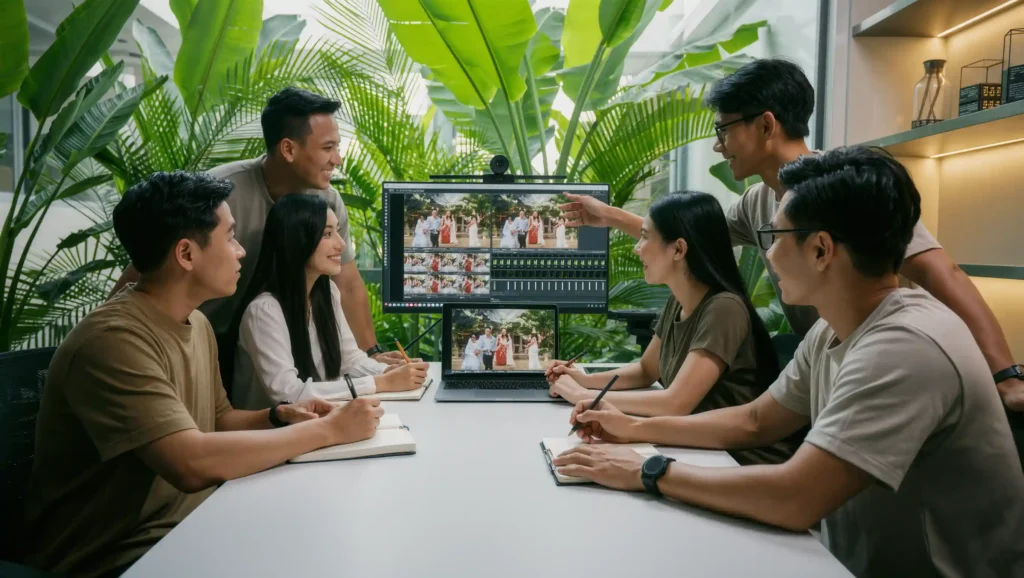
Video post-production refers to everything that happens after filming wraps the editing, color correction, sound mixing, visual effects, and final export that shape raw footage into a finished piece. It’s the stage where pacing is refined, emotional beats are emphasized, and technical inconsistencies from filming (uneven lighting, background noise, shaky transitions) are smoothed out. A skilled editor doesn’t just trim clips; they build rhythm, tension, and release, guiding the viewer’s emotions from the first frame to the last.
In Bali, post-production carries an added layer of nuance. The island’s light shifts dramatically between the misty green of Ubud’s jungle and the sun-bleached shorelines of Uluwatu, so grading footage to feel cohesive across locations takes a trained eye. A team familiar with Bali’s terrain, weather patterns, and cultural rhythms can make editing choices that feel authentic rather than generic the difference between a video that could have been shot anywhere and one that unmistakably feels like Bali.
Why Is Video Post-Production Important in Bali?
Filming in Bali is the easy part. The island practically hands you beautiful frames: cliffs, ceremonies, rice terraces, ocean light. What it doesn’t hand you is consistency, structure, or emotional pacing and those are the things that decide whether you hold audience attention long enough for a viewer to watch to the end or scroll past. Below are the five reasons post-production carries so much weight for anyone producing video on this island.
- Bali’s Light Is Beautiful but Notoriously Inconsistent
A single day can swing from hazy morning blue to harsh midday contrast to golden hour warmth. Post-production is where an editor rebalances exposure and builds one consistent color language across the whole film. - Weddings and Events Are Emotionally Irreplaceable
A wedding, a father’s speech, or a fleeting reaction cannot be reshot. Careful editing is what protects those moments and keeps the film feeling like the event actually felt. - Tourism and Hospitality Brands Compete on a Global Feed
A villa in Canggu is competing with properties in Tulum, Phuket, and Santorini on the same scroll. Polished, consistent video is often what decides whether a viewer taps through to a booking page. - Sound Shapes Memory as Much as Visuals Do
On-location audio rarely captures Bali’s atmosphere cleanly on its own. Sound design in post-production rebuilds that ambience intentionally, so the film feels immersive even on phone speakers. - One Shoot Has to Serve Many Platforms
A single day of filming often needs to become a reel, a highlight film, and a full edit, each with different pacing needs. Post-production reshapes one shoot into a full set of deliverables that work across every platform you use.
Read more: Recommended Bali YouTube Videographer Services for Brands and Creators
Core Elements of Stunning Video Post-Production in Bali
Great post-production in Bali starts with editing that respects the pace of the island itself not rushed, not sluggish, but paced to let a sunset breathe or a laugh land naturally before cutting away. Editors work through hours of footage to find the handful of moments that actually carry the story, discarding the rest without losing the sense of a full day or event: video editing at its most intentional.
Color grading follows closely behind, and in Bali it’s arguably where the island’s identity comes through most clearly. Warm skin tones under harsh midday sun, the deep green of rice paddies, and the soft blue of dusk over the ocean all need careful calibration so the footage looks the way Bali actually feels to be in, rather than an oversaturated postcard version of it.
Sound design and mixing round out the sensory picture, layering in ambient audio, dialogue clarity, and music that complements rather than overwhelms the visuals. Finally, finishing touches motion graphics, subtitles, aspect ratio adjustments for different platforms ensure the film is not just beautiful but genuinely usable across the client’s needs, with animated visuals and text overlays often included in branded content deliverables.
Who Is Video Post-Production in Bali Perfect For?
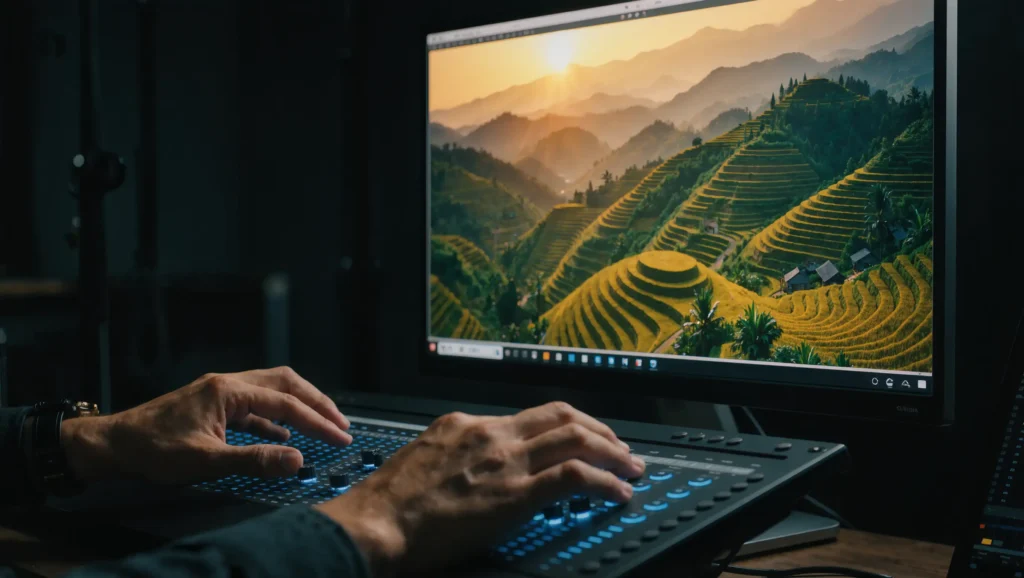
Post-production isn’t a service reserved for big-budget productions. Anyone sitting on footage that hasn’t yet become a finished film benefits from it whether that’s a couple with a hard drive from their wedding videographer, a resort with months of unused clips, or a business trying to turn raw footage into usable marketing assets. These five groups get the most out of it.
- Wedding and Pre-Wedding Couples
Most couples finish their wedding day with hours of raw footage and no clear idea how to turn it into something they’ll actually rewatch. Post-production shapes that material into a real narrative arc while protecting the emotional details that matter most. - Hotels, Villas, Resorts, and Property Developers
Accommodation and property sell almost entirely on atmosphere, and atmosphere is built in the edit. Post-production also adapts one shoot into everything a property needs, from a hero film to short clips for booking platforms and social media. - Tour Operators and Travel Brands
Travel businesses live or die by how well they make someone imagine themselves inside an experience. Editing decides how quickly the film gets to its best moment and keeps every trip film feeling like part of the same recognizable series. - Corporate, Event, and Commercial Clients
Conferences, product launches, retreats, and brand campaigns filmed in Bali all share the same challenge: a lot of footage and a short attention window. Post-production condenses that footage into a recap that holds attention and stays aligned with brand guidelines. - Filmmakers, Creators, and Fellow Videographers
Independent filmmakers and content creators frequently shoot far more than they can realistically edit. Outsourcing post-production clears the backlog and protects turnaround times, so they can keep shooting instead of disappearing into a timeline for weeks.
Tips for Stunning Video Post-Production in Bali
The best edits usually trace back to decisions made long before the footage reaches an editor. These five habits consistently separate projects that come together smoothly from those that stall in revisions.
1. Shoot with the Edit Already in Mind
An editor can only work with what the camera gave them, and the most common problem isn’t bad footage it’s repetitive footage. Coverage is what creates rhythm: wide establishing shots to set a location, mid shots for action, tight details of hands, textures, and faces, plus cutaways for reactions. A three-minute sequence usually needs far more variety than most people expect, and holding a single angle for eight seconds because there’s nothing to cut to is immediately visible in the final film.
Before wrapping any important moment, it’s worth checking that you have at least three distinct angles or focal lengths of it. And back everything up the same night Bali’s humidity, sand, and sudden rain are hard on cards and drives, and a duplicate copy costs nothing compared to losing a ceremony in transfer.
2. Protect Your Audio on Set, Because Post Can Only Do So Much
Sound is where footage shot in Bali most often gets compromised: wind coming off the Uluwatu cliffs, generator hum at a villa, gamelan bleeding into a quiet vow, or a passing scooter arriving exactly on the punchline of a speech. Noise reduction can clean up mild hiss and rebalance a slightly muddy mix, but it cannot reconstruct dialogue that was never clearly recorded in the first place.
Lapel mics on whoever is speaking, a shotgun mic as backup, and a separate recorder running throughout will save more time in post than almost any other on-set decision. It’s also worth capturing thirty seconds of clean ambience at each location waves, birds, room tone, temple sounds. That material is invaluable during sound design and impossible to recreate convincingly later.
3. Share References and Agree on the Mood Before Editing Starts
Words like “cinematic,” “natural,” “warm,” and “modern” can point to very different creative ideas, and an editor working from adjectives alone is guessing. Two or three reference films, a short mood board, a clear concept, and music direction give far more useful guidance than a paragraph of description, because they align tone, pacing, color, and what the cut needs to develop. That foundation helps shape stories that fit the intended tone.
The same principle applies once revisions begin. Compiling feedback into one organized round per version rather than sending notes as they occur to you over several days lets an editor make cohesive changes instead of chasing conflicting instructions. A single clear list produces a considered recut that preserves the editor’s perspective; drip-fed notes produce a patchwork.
4. Lock Your Deliverables and Music Licensing Early
A vertical reel, a three-minute highlight, a twenty-minute full-ceremony edit, a sixty-second hotel promo, and a cut for youtube are different films, not different exports of the same one. Aspect ratio, pacing, and music all change between them, and recomposing a finished widescreen film into vertical after the fact often means reframing every single shot. Naming every deliverable you’ll need before editing begins is far cheaper than requesting them afterwards.
Music deserves the same early attention. Confirm that any track is properly licensed for how you intend to use it, whether the final cut is for social platforms or YouTube, especially for commercial work or anything facing platform copyright claims. Because cuts are timed to musical beats, swapping a track late doesn’t just change the soundtrack it forces a rebuild of the entire rhythm of the edit.
5. Choose a Team That Understands Bali, Not Just the Software
Plenty of local post teams and on-the-ground crew know their way around Premiere or DaVinci Resolve. Teams that also work in video production can better anticipate how footage was captured on location. Far fewer know when a Balinese ceremony should be allowed to breathe rather than trimmed for pace, how to grade the intense green of rice terraces without turning skin tones sallow, or how the light behaves differently in Ubud’s valleys compared to Uluwatu’s exposed cliffs. Those judgments are cultural and environmental as much as technical, and they’re what make a film feel like it was made by someone who has actually been there.
There’s a practical advantage too. Working with a local team means the same time zone, faster revision cycles, the option of reviewing a cut in person, and support with shoot logistics, including managing National Film Permits when projects extend beyond post-production; that regional familiarity also helps across Bali and wider Indonesia, and some teams support projects across the APAC region. For time-sensitive projects, that proximity often matters as much as the craft itself.
Read more: 8 Common Mistakes in Product Video Production That Ruin Your Marketing
Create Timeless Video Post-Production in Bali with Juara Production
A film is only as strong as the story told in the edit. Raw footage, however beautifully shot, needs a steady creative hand to become something that truly connect with the audience through the warmth, color, and emotion of Bali. From color grading to sound design, thoughtful post-production is what turns a collection of clips into a film worth revisiting for years to come.
At Juara Production, our editing team combines technical craft with a genuine feel for Bali’s rhythm, helping couples, brands, creators, and companies alike turn their footage into polished, meaningful films through post-production and Video Production Services. Contact the team to collaborate or meet about a project.
Frequently Asked Questions
Related Article
Cinematic Wedding Videography in Bali: Relive Your Day Like a Film
There’s a particular kind of stillness that settles in years...
There’s a particular kind of stillness that settles in years after a wedding, when the flowers have long faded and...

Sound Design and Mixing for Video Production in Bali: Complete the Story with Sound
There’s a reason a beautifully shot video can still feel...
There’s a reason a beautifully shot video can still feel unfinished, and it usually has nothing to do with the...
Video Color Grading Services in Bali: Give Your Footage a Cinematic Finish
There’s a moment in post-production when a video stops looking...
There’s a moment in post-production when a video stops looking like raw footage and starts looking like a film, and...
