
Indonesia’s Liveaboard Yachts and the Yards That Build Them

Juara Production Editorial Desk
June 23, 2026
2 min read
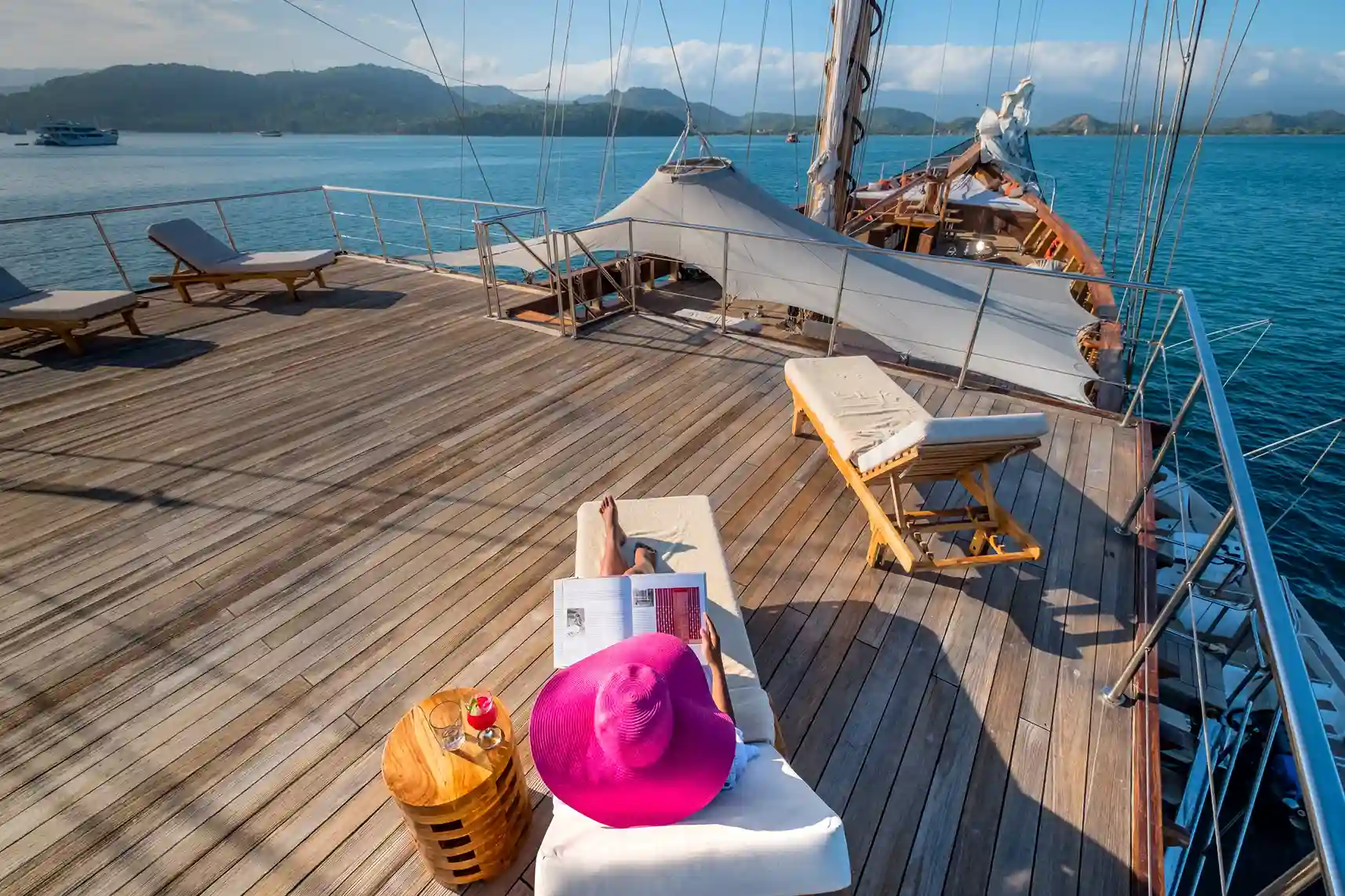
Indonesia’s liveaboard scene runs on the phinisi — the twin-masted wooden vessel that has carried trade across the archipelago for centuries and now anchors a growing luxury-charter industry. Behind every charter sits a build story, and behind every build sits a yard.
Quick answer
Indonesia’s premium liveaboards are mostly hand-built phinisi from South Sulawesi yards, then fitted out for diving and cruising. Knowing the builder and operator behind a vessel tells you more about quality than any brochure — hull craftsmanship, stabilisation, and cabin engineering all trace back to the yard.
The yards
Traditional boatbuilding still centres on Sulawesi, where shipwrights shape ironwood hulls largely by eye. Specialist operations such as Komodo Yacht Construction bridge that craft with modern naval architecture, producing vessels rated for open-water Komodo and Banda crossings.
The fleet
On the water, the result is a spectrum from intimate two-cabin phinisi to full superyachts. Charter brands like Komodo Superyacht and Indonesia Luxury Yachts operate at the higher end, with stabilised hulls, en-suite cabins, and dedicated dive decks.
What to ask before you book
Year built and last refit, cabin count versus guest count, dive-deck layout, and whether the crew includes a certified divemaster. A good operator answers all four without hesitation.
Frequently asked questions
Is a wooden phinisi safe for open water? Yes — properly built and maintained hulls cross the Banda Sea routinely.
New or classic vessel? Newer builds offer better stabilisation; classic phinisi offer character. Match it to your route.
Related Article

Video Dubbing and Voice-Over Services Bali: Give Your Story a Voice That Resonates
Bali has a way of speaking to people through its...
Bali has a way of speaking to people through its visuals: the layered rice terraces, the temple ceremonies at dawn,...
Diving Beyond Komodo: Alor, the Banda Sea and the Anambas
Komodo earns its fame, but Indonesia’s dive map runs far...
Komodo earns its fame, but Indonesia’s dive map runs far wider. For divers who have already logged Manta Point and...
Beyond Komodo: Why Raja Ampat Belongs on Your Indonesia Voyage
Travellers who fall for Komodo’s dragons and pink beaches often...
Travellers who fall for Komodo’s dragons and pink beaches often ask what comes next. For divers and luxury cruisers alike,...
